

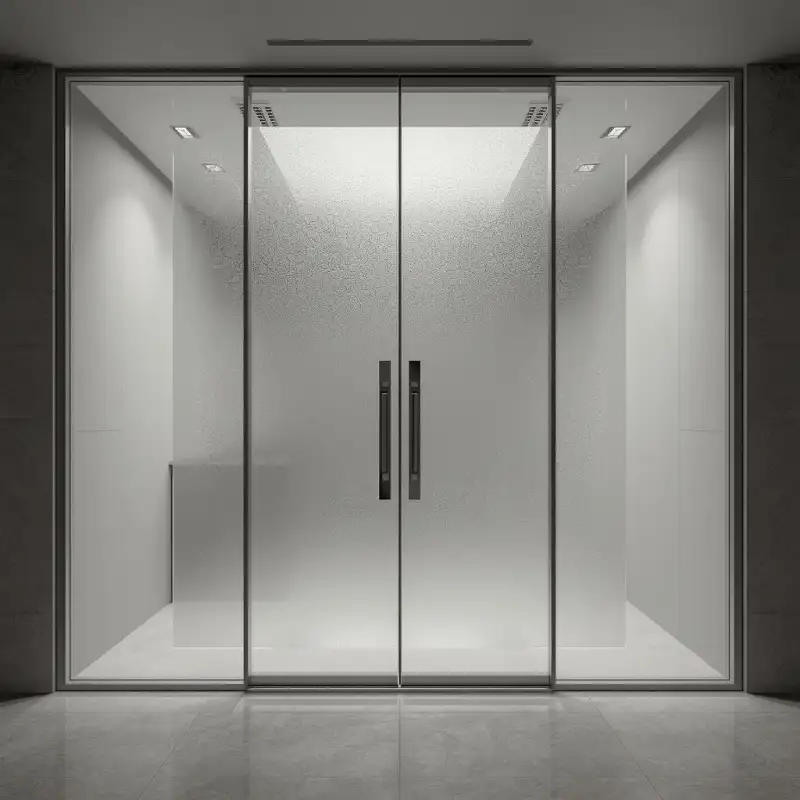
Walk into most Midtown law firm receptions and the firm name on the glass entry door was either sandblasted into the glass or applied as an etch-look vinyl film, and most visitors could not tell you which. The difference matters for budget and durability, and this guide breaks down both approaches along with where etched glass fits in a law firm or financial office beyond the front door, from reception entries to interior partition walls.
Sandblasted Glass vs. Vinyl Etch Film
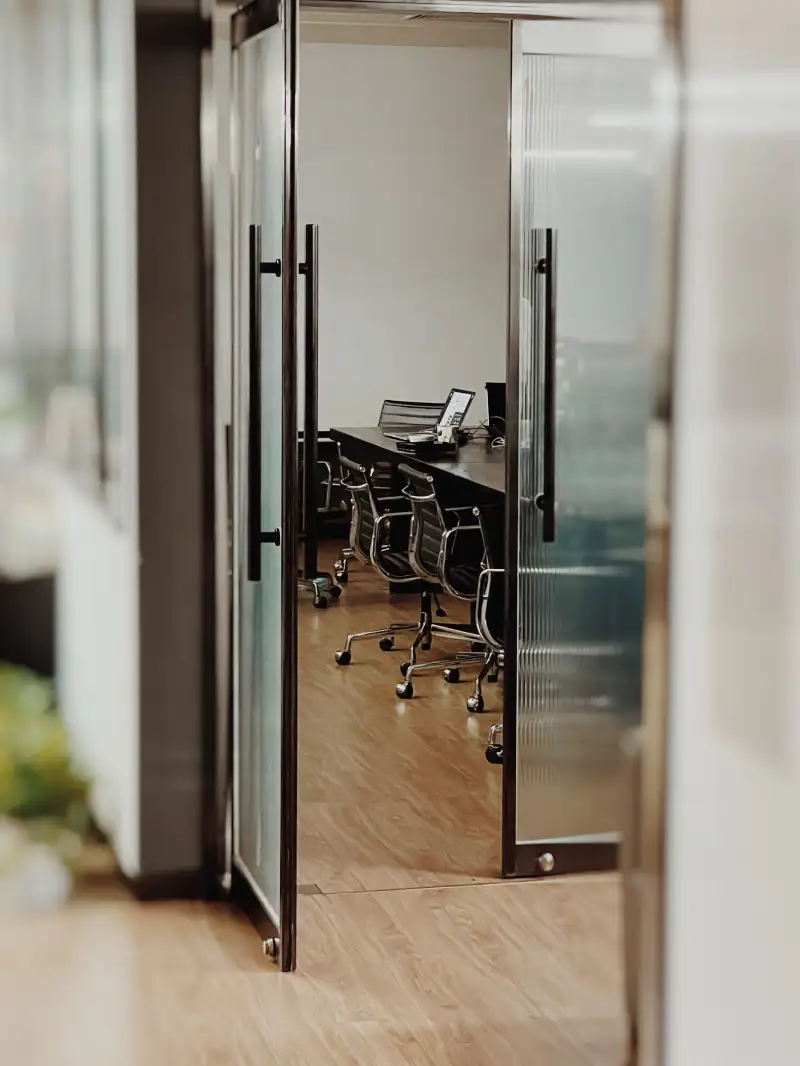
True sandblasted etching removes a thin layer of the glass surface itself using pressurized abrasive media through a cut stencil, producing a permanent frosted pattern that will not peel, fade, or scratch off. It costs more and takes longer to produce because it requires the actual glass panel to be sent out for etching.
Vinyl etch film mimics the sandblasted look using a frosted adhesive film cut into the same pattern and applied to the glass surface. It costs a fraction of true sandblasting, installs in a fraction of the time, and can be removed or replaced if a firm rebrands or a tenant changes, which makes it the more common choice for leased office space where a firm may not control the glass long-term.
Where Etched Glass Signage Works Best
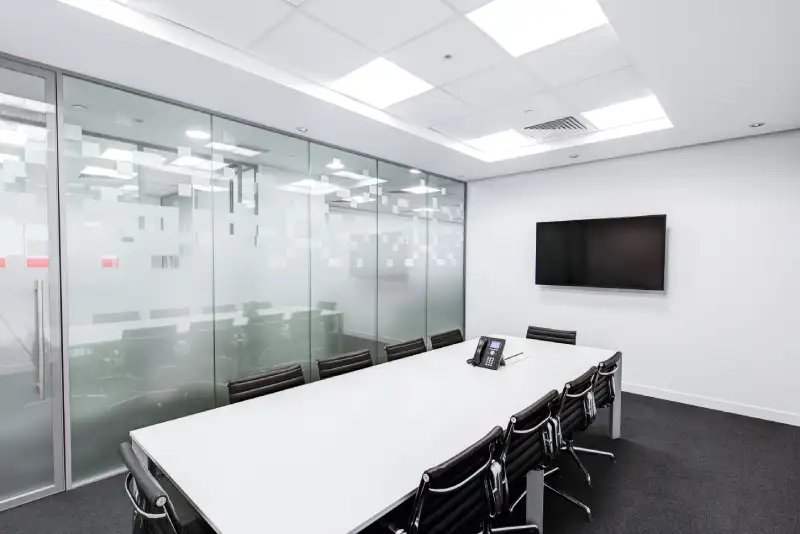
Entry door and sidelight lettering is the most visible application, and it is where the sandblasted-versus-vinyl decision usually gets made based on how long the firm expects to occupy the space. Interior glass partitions between conference rooms and open work areas are the second most common location, and this is where etched patterns get paired with office signage for a consistent look between the reception area and interior meeting spaces.
Frosted confidentiality bands, a horizontal strip of solid frosting at eye level, are frequently requested by law firms and financial offices specifically to block sightlines into conference rooms during depositions or client meetings without blocking light entirely.
Design Considerations for Law Firms and Financial Offices
Firm logos etched or applied to glass read best when simplified, since fine detail in a logo can lose legibility once frosted rather than printed in full color. Most fabricators recommend a single-color, high-contrast version of a logo for glass work even if the firm brand uses multiple colors elsewhere.
Financial offices in particular tend to prefer a restrained, minimal etch pattern, typically just the firm name and a small mark, rather than a full decorative pattern, since the goal is a clean, trustworthy reception impression rather than a decorative statement.
Installation and Lead Times
Vinyl etch film installation is typically a same-day or next-day job once artwork is approved, since it applies directly to existing glass with no fabrication delay. True sandblasted glass requires the panel to be etched off-site, so lead times commonly run one to two weeks depending on panel size and complexity.
For firms replacing existing glass rather than working with glass already installed, add time for the glass fabrication and installation itself, which is a separate process from the etching or film application.
Maintaining Etched Glass in a High-Traffic Office
Sandblasted glass holds up to standard glass cleaner without any special handling, since the frosted texture is part of the glass itself rather than a surface applied on top. Vinyl etch film should be cleaned with a soft cloth and avoid ammonia-based cleaners at the edges, since repeated harsh cleaning at the film perimeter can shorten its lifespan over several years.
Entry door glass in particular sees the most fingerprint and smudge contact of any etched surface in an office, so firms in high-traffic lobbies sometimes choose a fully frosted panel over a partial pattern specifically because full coverage shows fingerprints less than a partial etch against clear glass.
Working With a Local New York Sign Partner
Glass work in occupied office space requires coordination that a national vendor working through a distributor often cannot match: measuring existing glass on-site, scheduling installation around business hours or after-hours access, and handling a rush reprint if a firm rebrands mid-lease. A locally based fabricator can typically measure, template, and install etched glass signage within a single coordinated visit rather than requiring separate site visits weeks apart.
Budgeting for Etched Glass Across an Office Buildout
Firms planning a full office buildout typically request etched glass pricing alongside general contractor bids, since the glass fabrication timeline needs to align with when partition walls go up. Waiting until after construction is complete to order etched glass signage often adds weeks to a project that could have run in parallel with buildout.
A firm choosing vinyl etch film over true sandblasting for budget reasons at move-in can still upgrade specific high-visibility panels, most often the entry door, to sandblasted glass later without redoing the rest of the interior glass, since the two finishes can coexist within the same office.
Etched Glass and Building Code Requirements
Glass partitions and doors in commercial office space are subject to safety glazing codes, meaning tempered or laminated glass is required in specific locations such as doors and sidelights adjacent to doors, regardless of whether the glass will be etched. Etching itself does not typically require additional permitting, but the underlying glass installation or replacement often does in New York commercial buildings.
Firms working within an existing lease, rather than replacing glass outright, generally avoid triggering a new permitting review, since applying etch film or sandblasting to glass that is already installed and code-compliant is a surface treatment rather than a structural glazing change.
Etched Glass Signage FAQs for New York Law Firms and Financial Offices
What is the difference between sandblasted glass and vinyl etch film?
Sandblasted glass is permanently etched into the glass surface itself using abrasive media and will not peel or fade. Vinyl etch film is an adhesive frosted film applied to the glass surface that mimics the same look at lower cost and can be removed or replaced later.
How long does etched glass signage take to install?
Vinyl etch film typically installs same-day or next-day once artwork is approved. True sandblasted glass usually takes one to two weeks since the panel must be etched off-site before installation.
Can etched glass signage be removed if our firm relocates?
Vinyl etch film can be removed without damaging the underlying glass, which makes it a common choice in leased space. Sandblasted glass is permanent to that panel and is not designed to be removed or transferred.
What is a confidentiality band on glass partitions?
A confidentiality band is a horizontal strip of solid frosting placed at eye level on a glass partition. It blocks sightlines into a conference room or office during meetings while still allowing light through the rest of the panel.
Is vinyl etch film as durable as sandblasted glass?
Vinyl etch film is durable for typical office use but is not as permanent as true sandblasting, since it is an applied surface rather than an alteration of the glass itself. For long-term occupancy in owned space, sandblasted glass is the more permanent option.